


The Evolution of Optical Correction: Navigating Your Lens Choices
Human visual demands have undergone revolutionary changes over the past few decades. In the past, eyeglasses were simply used to see distant road signs or nearby newspapers; today, our eyes must frequently switch between smartphones, laptops, car dashboards, and the distant horizon. This fast-paced, multi-screen lifestyle places extremely high demands on lens design.
In the field of vision correction, Single Vision Lenses and Varifocal Lenses (also known as Progressive Lenses) are the two core solutions. Although they may look very similar in appearance, their internal optical geometries are fundamentally different.
This guide aims to provide an in-depth professional analysis to help you understand the working principles, technical parameters, and how these lenses affect your daily life. Whether you are discovering difficulty reading for the first time or looking for a more efficient professional vision solution, understanding the differences between Single Vision Lenses and Varifocal Lenses is the first step toward achieving clear and comfortable vision.
What are Single Vision Lenses?
Definition and Optical Design
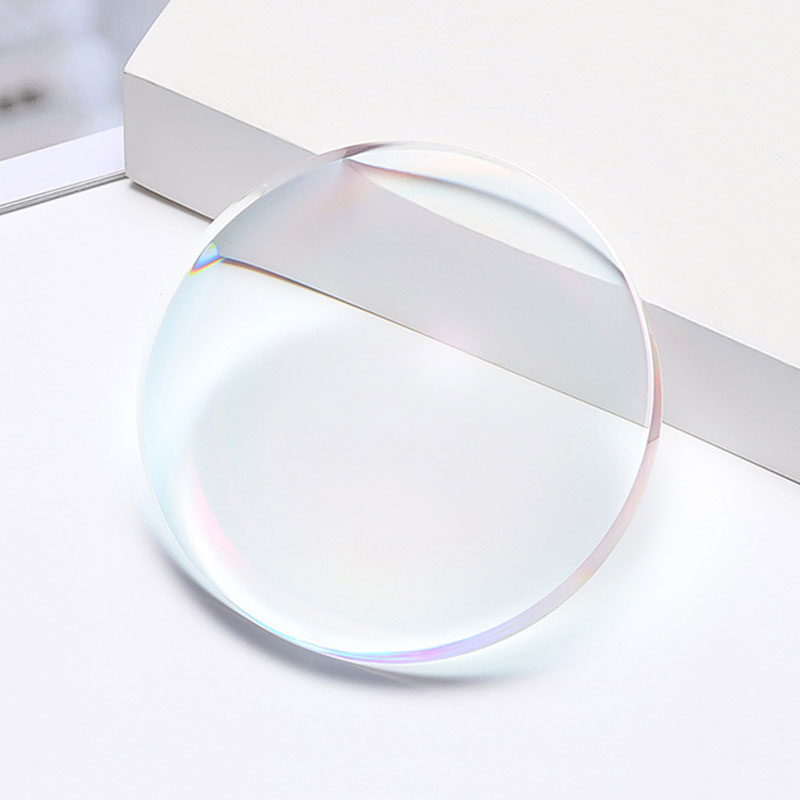
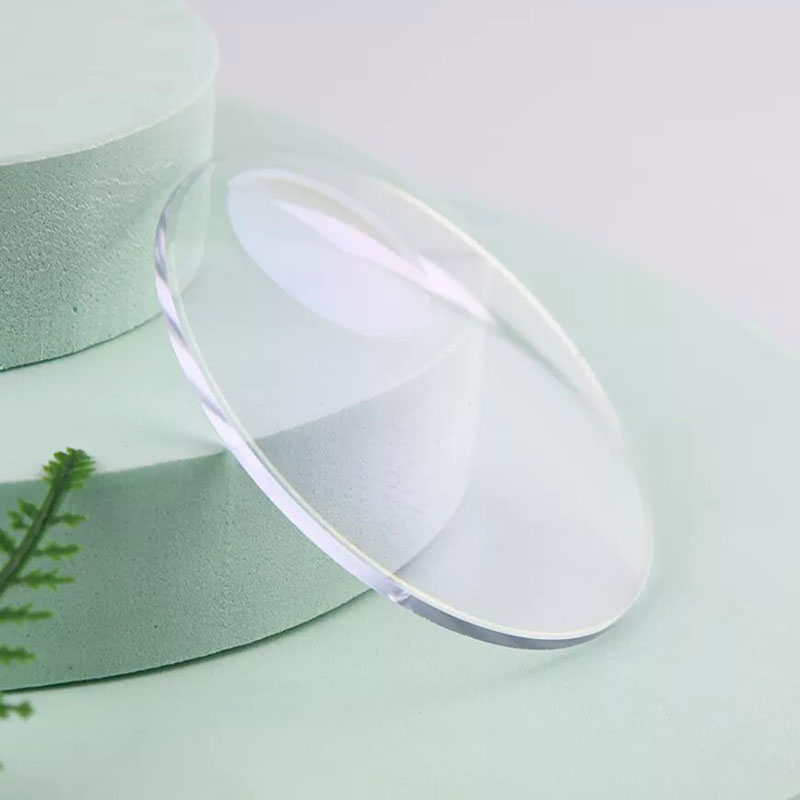
Single Vision Lenses are the most basic and widely used lens type in the optical world. As the name suggests, these lenses have only a single optical focal power across their entire surface. This means that whether your line of sight passes through the center or the edge of the lens, the corrective power remains constant and consistent.
From a manufacturing perspective, the radius of curvature of a single vision lens is fixed on specific meridians. This structure allows light to focus precisely on a single point on the retina, thereby resolving blurred vision at a single distance.
Technical Specifications and Correction Range
Single vision lenses are primarily used to correct three types of refractive errors:
- Myopia (Nearsightedness) : Uses concave lenses (minus lenses) to diverge light, moving the focus back onto the retina.
- Hyperopia (Farsightedness) : Uses convex lenses (plus lenses) to converge light, moving the focus forward onto the retina.
- Astigmatism : Uses cylindrical power to correct image distortion caused by an irregular corneal shape.
Core Parameter Comparison: Classification of Single Vision Lenses
Depending on the correction goal, the parameter settings for Single Vision Lenses vary significantly:
| Category | Distance Single Vision | Reading Single Vision | Computer Single Vision |
| Primary Use | Driving, TV, Outdoor sports | Reading books, handiwork | Screen work, reading music |
| Typical Focal Length | 6 meters to infinity | 33 cm to 40 cm | 60 cm to 80 cm |
| Optical Field of View | 100% full lens clarity | 100% full lens clarity | 100% full lens clarity |
| Peripheral Distortion | Extremely low | Extremely low | Extremely low |
Ideal Target Audience
Single Vision Lenses are suitable for users of almost all ages, especially:
Teenagers and Students : Usually only need correction for myopia or astigmatism.
Adults under 40 : The eye's ability to accommodate is still strong and can automatically adjust focus.
Specific Professionals : Such as professional drivers who need a wide field of view, or watchmakers who only need to see tiny parts at a close distance.
While Single Vision Lenses provide unparalleled field width and clarity, their limitation lies in "single functionality." When an individual enters the stage of presbyopia (age-related vision loss), a single-focus lens can no longer meet the needs of seeing both far and near simultaneously, which is where Varifocal Lenses come into play.
What are Varifocal Lenses?
Definition and Progressive Design Principles
Varifocal Lenses , often referred to as Progressive Addition Lenses (PALs) in the optical field, differ from the single focal length of Single Vision Lenses . The surface of a Varifocal Lens undergoes complex mathematical modeling and precision digital cutting to achieve a "seamless transition" optical effect.
The original intention of this lens design is to simulate the natural accommodation function of the eye in its youth. The lens starts with a distance zone at the top, passes through a narrow intermediate corridor, and transitions smoothly to the near zone at the bottom. This design completely eliminates the obvious dividing line found on traditional bifocals, making them indistinguishable from Single Vision Lenses in appearance.
The Three Core Visual Zones
To understand how Varifocal Lenses work, one must deconstruct the three functional zones distributed vertically:
Distance Zone : Located at the top of the lens. When the wearer looks straight ahead, their line of sight passes through this area for driving, watching movies, or outdoor activities.
Intermediate Zone : A narrow strip in the middle of the lens (also called the visual corridor). The power here gradually increases, specifically designed for seeing screens, car dashboards, or items on supermarket shelves.
Near Zone : Located at the bottom of the lens. When the wearer looks down, their line of sight passes through this area for reading books, using a phone, or doing fine handiwork.
Core Parameter Comparison: Design Differences in Progressive Lenses
Varifocal Lenses are not all the same; different design parameters determine the wearer's comfort.
| Technical Parameter | Soft Design | Hard Design |
| Rate of Power Change | Slow change, smooth gradient | Rapid change, steep gradient |
| Field of View Width | Relatively narrow distance/near zones | Very wide distance/near zones |
| Peripheral Distortion | Distributed widely but mild | Concentrated locally and severe |
| Adaptation Difficulty | Lower, suitable for first-time users | Higher, suitable for experienced users |
| Swim Effect | Weaker, more stable spatial sense | Stronger, potential swaying when turning |
Ideal Target Audience: Why the 40 Population Needs Them
The primary audience for Varifocal Lenses is people with Presbyopia . As age increases, the lens inside the eye gradually loses elasticity, making it impossible to focus quickly between different distances.
Multi-taskers : Professionals who need to see PPTs (far), laptops (intermediate), and meeting notes (near) simultaneously.
Convenience Seekers : Users tired of frequently switching between Single Vision Lenses and reading glasses.
Image Conscious : Users who do not want to reveal their age with the "dividing line" on their lenses.
Key Differences Between Single Vision and Varifocal Lenses
Dimension of Vision Correction (Distance Correction)
Single Vision Lenses : Provide "point-to-point" precision. If you are nearsighted, they only handle far vision; if you have presbyopia, they only handle near vision. They provide 100% optical clarity at a single distance.
Varifocal Lenses : Provide "point-to-surface" continuity. They integrate countless continuous focal points on one lens, allowing vision to switch freely between far, intermediate, and near. While there may be slight blur at the extreme edges, the overall visual logic is more in line with human physiological habits.
Visual Zone Distribution
Single Vision Lenses : Have only one visual zone. The entire lens offers a wide field of view with almost no peripheral "soft focus" or distortion, making it ideal for situations requiring wide-angle eye movement.
Varifocal Lenses : Manage space through a "visual corridor." The wearer needs to find the clearest viewpoint through slight head movements rather than just eye movements.
Adaptation Period and Wearing Experience
Single Vision Lenses : Require almost no adaptation. Clarity is instant, and the brain processes the visual signals immediately.
Varifocal Lenses : Usually require a 1–2 week "brain remodeling" period. Wearers need to learn how to look at different objects through different heights of the lens.
Physical Parameters and Frame Requirements
When choosing a frame, the requirements for these two differ greatly:
| Parameter Index | Single Vision Lenses | Varifocal Lenses |
| Minimum Frame Height (B-Size) | No limit, ultra-narrow frames okay | Usually requires 28mm (to ensure corridor) |
| Fitting Height (FH) | Recommended, usually center point | Critical , must be precise to the mm |
| Lens Thickness Control | Depends on power and index | Complex due to multi-focal power distribution |
| Peripheral Distortion Sensation | Extremely low | Medium to high (depending on lens grade) |
Advantages and Disadvantages: A Technical Deep Dive
Core Performance Parameter Comparison: Single Vision vs. Varifocal
| Dimension | Single Vision Lenses | Varifocal Lenses |
| Visual Consistency | Uniform clarity across the lens | Power gradient in vertical direction |
| Peripheral View | Almost no distortion at edges | Inevitable "soft focus" zones on sides |
| Depth Perception | Stable, good for sports/terrain | Potential "swim effect" during adaptation |
| Convenience | Requires switching (if presbyopic) | One pair covers all distances |
| Optical Distortion | Extremely low | Moderate (depending on design level) |
| Weight and Thickness | Relatively lighter and thinner | Complex thickness due to power changes |
Single Vision Lenses: Pure Optical Experience
Advantages
Unobstructed View : The biggest technical advantage is "full-field clarity." Since the power is consistent, the wearer can use every corner of the lens without moving their head.
Rapid Adaptation : For first-time wearers or those with frequent prescription changes, the stress on the brain to process signals is nearly zero.
Cost-Effectiveness : The manufacturing process is simple and does not require extremely high-precision measurements like pantoscopic tilt.
Disadvantages
Functional Limitation : For users over 40, once presbyopia occurs, the weakness of "choosing one over the other" appears—seeing road signs but not the dashboard.
Lifestyle Interruption : Frequent switching of glasses reduces efficiency and increases the risk of loss or damage.
Varifocal Lenses: The All-in-One Visual Manager
Advantages
Continuous Visual Flow : Varifocal Lenses mimic natural accommodation. By micro-adjusting gaze height, users get a smooth flow between distances without the "image jump" of bifocals.
Ergonomic Optimization : In an office setting, wearers can easily focus on screens by adjusting their chin position, reducing neck strain.
Aesthetic Value : Completely removes the age-revealing line, increasing user confidence.
Disadvantages
Peripheral Distortion : Due to physics, blur zones must exist on the sides. Sudden head turns may cause a swaying sensation.
Adaptation Cost : New users must "train" their brain to identify zones. Spatial-sensitive individuals may need longer.
Dependency on Precision : Requires high accuracy in eye exams and frame fitting. A 1–2 mm error can lead to narrow vision or dizziness.
Who are They For? Scenario-Based Selection Guide
Best Candidates for Single Vision Lenses
Nearsighted/Farsighted under 40 : Their eyes still have strong automatic focusing power.
Full-time Drivers : Long-distance driving requires wide and stable peripheral far-vision.
Night Workers : Since light loss is minimal, they provide better contrast in low light.
Sports Enthusiasts : For sports like tennis or badminton requiring fast eye tracking.
Best Candidates for Varifocal Lenses
Presbyopic Group (40 ) : Solves the dilemma of looking at a phone versus looking at the road.
Multi-tasking Office Workers : For those switching between presentations (far), notes (near), and emails (intermediate).
Modern Car Owners : Need to see road conditions (far), navigation screens (intermediate), and steering wheel buttons (near).
Common Misconceptions: Debunking Lens Myths
Myth: Varifocals will make me dizzy and fall
Reality : Modern Varifocal Lenses use Digital Freeform Technology . Through point-to-point laser cutting, distortion is pushed to the extreme edges. The "swaying" sensation is greatly suppressed in high-quality designs.
Myth: Single vision lenses are better because they are simpler
Reality : The quality of a lens depends on whether it solves the user's visual conflict. If a presbyopic patient insists on wearing distance single vision lenses to read, it causes eye strain and accelerates visual fatigue.
Myth: All varifocal lenses are the same
Reality : There are significant grades. Entry-level designs have narrower fields, while Personalized Designs compensate for face shape and frame tilt to widen the clear zones.
Choosing the Right Lenses: A Decision Framework
Vision Needs and Task Analysis
Single-Focus Tasks : If your work or hobby is concentrated at one distance for a long time, Single Vision Lenses provide the most stable performance.
Dynamic Switching : If your life involves frequent distance changes (e.g., cooking while reading a recipe and watching TV), Varifocal Lenses allow these movements to feel natural.
Lifestyle and Profession
Digital Nomads : For users of laptops, tablets, and phones, the intermediate and near zones of Varifocal Lenses significantly reduce "digital eye strain."
Outdoor Athletes : Single vision lenses provide the wide peripheral vision necessary for spatial orientation and safety.
Budget and Long-term Value
Initial Investment : Single vision lenses are cheaper due to mature manufacturing.
Comprehensive Value : Although Varifocal Lenses are more expensive per pair, they replace the need for three separate pairs (distance, computer, reading), making them more cost-effective in terms of convenience.
Fitting Precision: The Key to Success
Beyond the prescription (Diopters), these parameters determine comfort:
| Measurement | Single Vision | Varifocal | Purpose |
| Pupillary Distance (PD) | Required | Required (monocular) | Aligns pupils with optical centers |
| Fitting Height (FH) | Recommended | Mandatory | Determines vertical placement of zones |
| Pantoscopic Tilt (PT) | Optional | Core | Frame tilt angle affecting clarity |
| Vertex Distance (VD) | Optional | Core | Distance from lens to eye affecting field of view |
Technical Specifications: Coatings and Materials
Lens Materials
Standard Plastic (1.50 Index) : Best for value, suitable for low-power single vision users.
Polycarbonate (1.59 Index) : Highly impact-resistant, the top choice for children and outdoor sports.
High-Index (1.61, 1.67, 1.74) : Thins the edges, which is especially important for complex Varifocal Lenses to reduce weight.
Lens Coatings
Anti-Reflective (AR) Coating : Eliminates reflections and increases light transmission, vital for the narrow corridors of varifocals.
Blue Light Filtering : Can be added to both types to protect the retina from high-energy blue light (415–455nm).
Photochromic : Allows one pair of lenses to function as both corrective eyewear and sunglasses, enhancing the convenience of multifocal designs.
FAQ: Common Questions and Knowledge
Why do my Varifocal Lenses feel blurry on the sides?
Knowledge : This is a physical characteristic. To achieve continuous power change, surface astigmatism is pushed to the sides. High-quality Freeform designs minimize this sensation.
Can Single Vision Lenses be used as temporary "reading glasses"?
Knowledge : If your prescription is specifically set for "Near Vision," then they are reading glasses. However, wearing distance single vision lenses to read will cause eye strain.
What are the tips for adapting to varifocals?
Knowledge : Move your head, not just your eyes: When looking at objects to the side, turn your head so your nose points at the target. Vertical adjustment: When looking at near objects, keep your head still and lower your gaze.
What are "Office/Occupational Varifocals"?
Knowledge : These are special Varifocal Lenses that sacrifice distance vision to widen the fields for intermediate (computer) and near (keyboard) distances. They are more comfortable for heavy office work.
How often should I replace my lenses?
Knowledge : A comprehensive eye exam is recommended every 12–24 months. Whether using Single Vision or Varifocal , once a prescription shifts by more than 0.25D, the brain undergoes forced accommodation, leading to chronic fatigue.